
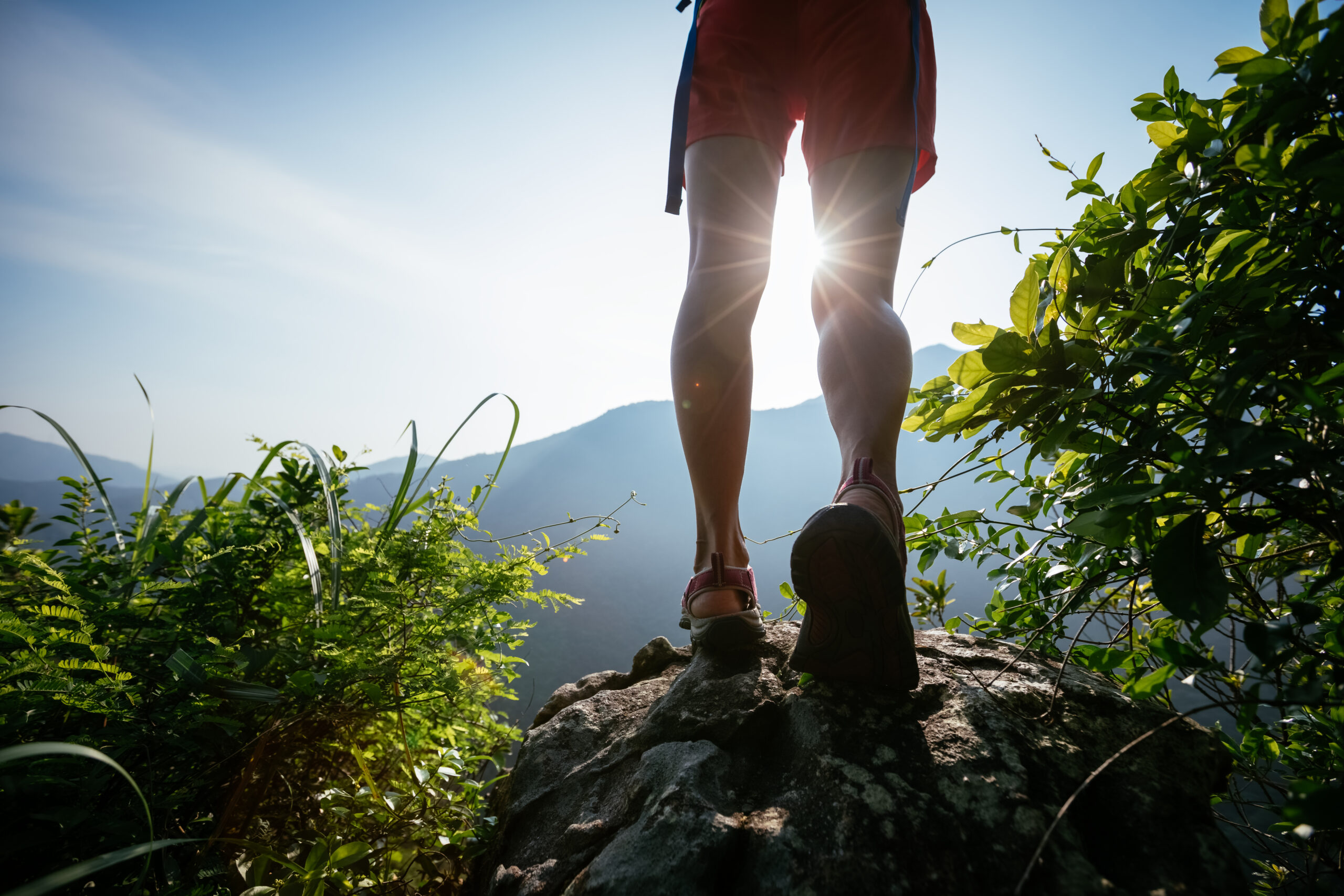
When planning a trip, we think about flights, packing lists, and itineraries but our feet are often forgotten. Yet they do the bulk of the work when we travel. From mountain trails to airport terminals, your feet take thousands of steps every day.
Different types of travel activities place different stresses on your feet, so knowing how to care for them can make a huge difference to your comfort. Here are some simple do’s and don’ts to keep your feet happy on your next adventure.
Hiking
Long hikes over uneven terrain, especially while carrying a backpack, can place significant pressure on your feet. The constant friction inside boots and repetitive impact from walking can lead to blisters, calluses, black toenails, and cracked heels if your feet are not properly supported.
Do:
Choose the right hiking shoes. This means not only the correct style but also the correct size. Many hikers prefer boots that are about a size bigger to allow for swelling and thicker socks. Wearing thick, cushioned hiking socks can also reduce friction and provide extra padding, particularly in colder climates.
Don’t:
Start a hike wearing brand-new boots that haven’t been broken in. Ill-fitting shoes whether too tight or too loose can quickly cause painful friction. Socks should also fit properly to avoid bunching.
Walking (Urban Travel and Sightseeing)
When exploring a new city, it’s surprisingly easy to walk 20 000 steps or more in a single day. Constant walking on hard pavements often in stylish rather than supportive footwear can lead to foot fatigue, swelling, corns, and dry cracked skin.
Do:
Wear breathable, well-fitting walking shoes. In warmer destinations, lighter or thinner socks can help keep your feet cool while still providing comfort. After a long day of sightseeing, moisturising your feet, especially the heels, can help prevent dryness and cracking. Products like Kroko’s Heel Balm are designed to keep heels soft and hydrated.
Don’t:
Ignore pressure points or early callus formation. Small irritations can become painful problems after several days of constant walking if they’re left untreated.
Running (Travel Training and Events)
Whether you’re travelling for a race or simply keeping up your fitness routine while away, running places repetitive stress on the feet. Blisters, plantar strain, toenail trauma, and excessive sweating are all common issues for runners.
Do:
Keep your toenails neatly trimmed and wear moisture-wicking socks to reduce friction. Pay attention to early signs of pressure or callus build-up so you can address them before they become painful. Using a Kroko Corn Protector can help cushion sensitive areas and reduce pressure from tight shoes.
Don’t:
Push through discomfort caused by tight footwear or rubbing. What starts as a minor irritation can quickly become a painful blister when you’re running longer distances.
Travelling by Plane or Boat
Long-haul flights and extended boat trips often mean limited movement, which can affect circulation. This may lead to swollen ankles, fluid retention, and dry skin, especially when feet remain confined in shoes for long periods.
Do:
Keep your feet dry and fresh by using a foot powder, such as Kroko’s Foot Powder, in your shoes before and after travelling. Wearing compression socks can also help support circulation and reduce swelling during long journeys.
Don’t:
Keep your feet completely still for the entire trip. Whenever possible, stretch your legs, rotate your ankles, and move around to improve circulation.
Give Your Feet a Little Extra Care
Travel often means spending far more time on your feet than usual, so small signs of discomfort shouldn’t be ignored. Treat pressure points early, keep heels moisturised, and give your feet a little extra care after long days of exploring.
With the right footwear, supportive socks, and a few simple footcare habits, your feet will stay comfortable enough to carry you through every step of the journey from mountain trails to city streets.
This will close in 0 seconds